Categories
Get Ready, Set, Grow! 6 Steps to Prepare your MSP for Inbound Marketing Success
2 Dec 2024
3 min read
Ahana
1. Identify your target audience: Define your Ideal Customer Profile (ICP)
How to identify the best clients for your MSP?
Start by examining your best current customers to spot patterns—think about their industries, company sizes, locations, and the specific IT problems you've helped them solve.
Identify problems you solve- What issues do these clients face that you help with? Know their goals- What are they trying to achieve? For example, improving security, reducing downtime, or scaling operations.
Do some market research to uncover industry trends and find niches others might be overlooking.
Focus on key details like who makes the decisions, their typical budgets, any compliance hoops they need to jump through, their business goals, and how they prefer to communicate.
Create a clear profile combining all this information and then proceed to tailor your marketing and services. Tailor your messaging to resonate with your ideal customer profile by using language that speaks to them, highlighting solutions that address their specific challenges, and reaching out through their preferred channels like industry publications or professional networks.
For instance, Electric focuses on small and medium-sized businesses that often lack in-house IT expertise. Their primary audience includes companies in industries such as technology startups, media, and professional services, where fast, efficient, and scalable IT support is essential. compliance with legal regulations.
2. Understand your competition: Keep your friends close and your competitors closer
Competitive analysis checklist
Start by identifying competitors targeting similar clients. Visit competitors' websites to see what services they highlight, their value propositions, and the problems they aim to solve. Look for gaps or areas where their offerings fall short.
Dive into their social media presence. Check what content they're posting, their engagement levels, and which services they emphasize. This helps identify trends and messaging that resonate with your shared audience.
Subscribe to their newsletters and emails to learn how they nurture leads, the tone they use, and the topics they prioritize.
Use tools to analyze their SEO strategy. Tools like SEMrush or Ahrefs can reveal their top-performing keywords, backlinks, and content strategies, helping you uncover their focus areas.
Examine customer reviews on platforms like Google Reviews, Yelp, or G2. Identify common complaints (e.g., poor response times) and strengths. This can show where you can differentiate.
See how they interact with the community. Are they active in industry forums, LinkedIn groups, or local events? Their participation (or lack thereof) offers insights into how they build relationships and credibility.
Consider their pricing models. If pricing isn't listed, look for clues in reviews or messaging to determine if they're targeting premium, mid-tier, or budget-conscious clients.
3. Craft a compelling value proposition: Show them why you're the perfect fit
Think of your value proposition as your business's elevator pitch—it's the core reason why a potential client should choose your MSP over others. It's about making your value so apparent that businesses immediately think, "This is exactly what we've been looking for!"
How to craft a compelling value proposition?
Start by identifying the key challenges and pain points your target clients face, whether it's minimizing downtime, enhancing cybersecurity, reducing IT costs, or adopting new technologies.
Understand what matters most to them—is it reliable 24/7 support, specialized expertise, or cost-effective solutions?
Consider what sets you apart- Do you have deep experience in a specific industry? Or do you offer faster response times or personalized support that competitors don't?
Craft your value proposition using clear, concise language that resonates with your clients. Avoid technical jargon that might confuse them. Focus on the outcomes they care about—improved efficiency, cost savings, peace of mind, and business growth.
Make it memorable. Use catchy phrases or powerful statements that stick in the minds of your prospects.
NexusTek’s homepage showcases a prime example of how to present a clear, impactful value proposition that immediately resonates with its target audience. Their value proposition, “Drive Growth, Cut Costs, and Mitigate Risks with NexusTek,” directly addresses the top concerns of their target clients: efficiency, cost savings, and risk management.

4. Set clear, SMART marketing goals: Turn your vision into action
How to set SMART marketing goals?
Specific: Clearly define what you want to achieve. Instead of saying, "We want more clients," specify, "We aim to increase our client base by 20% in the healthcare sector."
Measurable: Attach numbers to track your progress. For instance, "Increase website traffic by 30% over the next quarter."
Achievable: Ensure your goals are realistic given your resources. "Generate 50 qualified leads per month," can be one considering your team's capacity and marketing budget.
Relevant: Align your goals with your overall business objectives- along the lines of "Boost recurring revenue by focusing on long-term service contracts with small to mid-sized businesses."
Time-bound: Set a deadline to create urgency. For instance, “Achieve these targets within the next six months."
5. Build a client friendly, SEO-optimized website: Your digital storefront matters
How to make your website client-friendly?
Clear messaging: Within seconds, visitors should understand what you offer and how it benefits them.
Easy navigation: Make it simple for users to find the information they're looking for.
Clear calls to action (CTAs): Guide visitors on what to do next.
Contact information: Make it easy for clients to get in touch with you.
Implement basic SEO practices: Use relevant keywords that your potential clients are searching for throughout your website content. Optimize your page titles and meta descriptions with these keywords, and link to reputable sites.
Engaging content: Provide valuable information that addresses your clients' pain points.
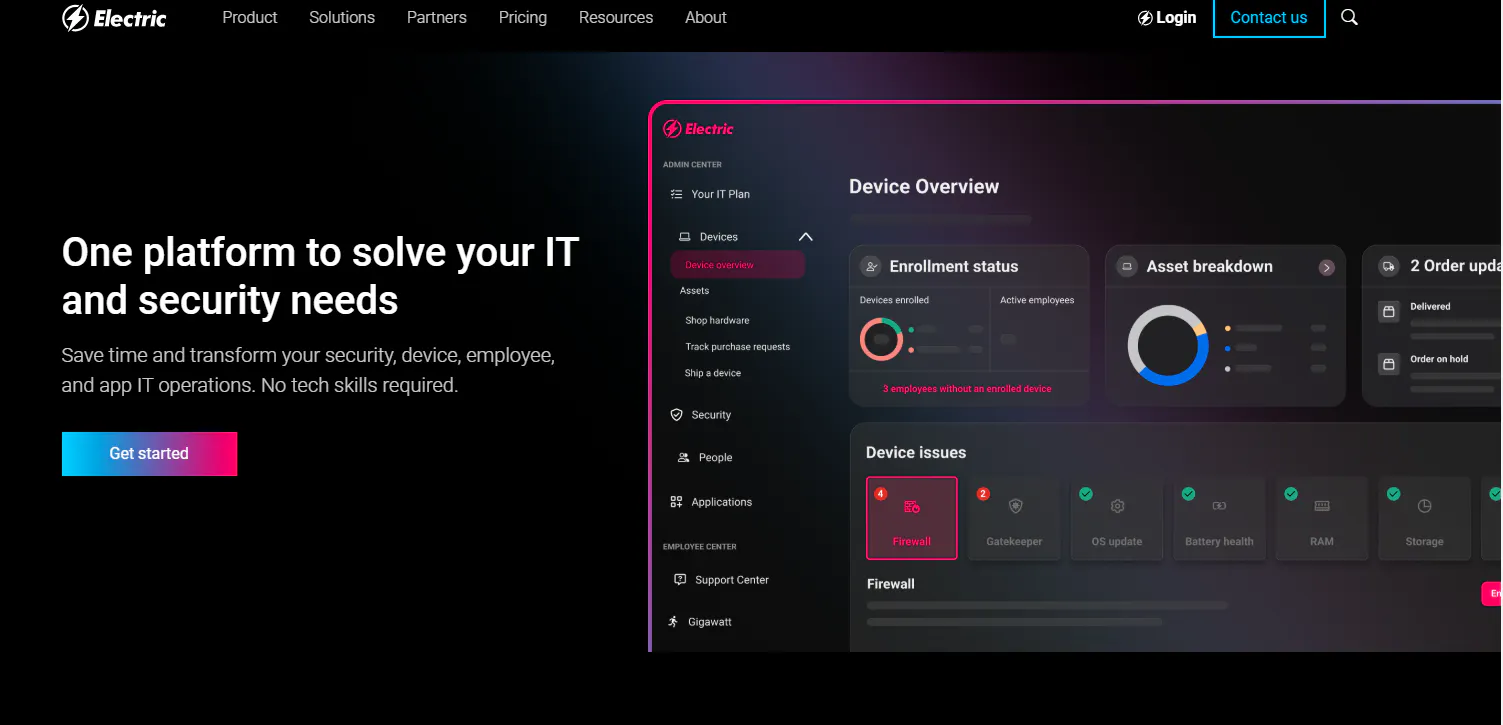
Take Electric for instance. Their homepage headline, “One platform to solve your IT and security needs,” clearly communicates its value, while intuitive navigation and strong CTAs like “Get started” guide visitors effortlessly. Engaging content, including blogs and webinars, addresses SMB IT challenges. On the SEO side, Electric targets keywords like “real-time IT support,” uses optimized meta descriptions, and regularly updates blogs to drive organic traffic and improve search rankings.
6. Utilize basic analytics and marketing automation tools
Start by setting up essential analytics tools. Use Google Analytics to track visitor behavior, top-performing pages, and traffic sources. Leverage Google Search Console to monitor your site’s presence in search results and address technical issues. Focus on key metrics like website traffic, bounce rates, and conversion rates.
Dive into your website data to see which pages most visited, how long visitors stay, and where they come from. Are they finding you through search engines, social media, or direct visits? Track important actions, like contact form submissions, newsletter sign-ups, or resource downloads.
Consider using a CRM system like HubSpot or Zoho CRM to track interactions with leads and clients. These tools can help you manage your sales pipeline, automate follow-ups, and keep all your client information organized in one place. Use tools like Mailchimp, SendinBlue, or MailerLite to create and automate email campaigns. Set up automated welcome emails or newsletters. Set triggers for when a lead downloads content or fills out a form.
Integrate Chatbots or Live Chat to provide instant responses on your website
Ensure all tools work together to streamline data collection and automate workflows.
Continuously evolve to stay ahead
Remember, no strategy is set in stone. Test new services, tweak campaigns, and always be open to change. Inbound marketing is about staying flexible and making data-driven decisions that align with your business goals and the needs of your clients. The steps you take now will not only strengthen your marketing but also set your business on a path to sustained growth and success.
Ready to Grow Your MSP Business?
Don’t settle for traditional methods. Download the MSP Success Playbook now and access the actionable strategies top MSPs use to fuel their lead generation and drive consistent growth.