Categories
In this article
- What happens when a Google Classroom is deleted?
- What happens when a student is deleted from the Classroom?
- Google Classroom data retention management
- Archiving
- Transfer ownership
- Third-party Google Classroom backup tools
- Archiving, deleting and unenrolling: what is the difference?
A Complete Guide to Google Classroom Data Retention
3 Nov 2026
10 min read
Amrit Raj
Google Classroom retention at a glance
- Google Classroom lacks built-in retention policies for deleted data, posing risks of permanent loss.
- Assignments, announcements, grades, and other critical data can be permanently lost without backup.
- Google Vault does not cover Google Classroom. It reaches the Drive files behind a class. It does not cover assignments, questions, announcements, grades or the class roster.
Read more
Google created Google Classroom – a free learning platform – to simplify the process of creating, distributing, and grading assignments. It allows teachers to create an online classroom where they can manage all the documents that their students need. As of 2025, around 150 million students, educators, and school leaders around the world rely on Google Classroom. Widespread use of Google Classroom also means there is an increase in risk of data loss due to a wide variety of reasons. The absence of a recycle bin in Google Classroom makes it tricky for IT administrators to retain Classroom data.
1. What happens when a Google Classroom is deleted?
Google Vault does not help here. Classroom is not among the services Vault supports for retention, holds, search or export. No retention rule or hold reaches the assignments, questions, announcements or grades. Only the Drive files behind the class are covered, through Drive retention.

2. What happens when a student is deleted from the Classroom?
Quiz Time!
How do you choose to backup your Google Classroom data?

3. Google Classroom data retention management
3.1 Archiving
3.1.1 What happens to an archived class?
- The archived classroom disappears from your active classroom list.
- Archiving a class causes it to be archived for all participants and will unlink your SIS (Student Information System) if your class is linked.
- Co-teachers can still preview and export items from the Classwork page of a class shared with them.
- The archived classroom will be placed under the ‘Archived Classes’ section. The teachers and students will be able to view the archived class from the ‘Archived Classes’ section.
- Archived classes cannot be modified by teachers or students unless they are restored.
- If you want to use an archived classroom, you will have to restore it.
- Teachers and students will be able to access any class materials in their respective Google Drive.
- Students will not be able to unenroll from an archived class.
- The class calendar will remain in the teacher’s and student’s Google Calendar. You will have to delete the calendar separately if you don’t need it anymore.
- An archived class can still be deleted by the primary teacher, and that deletion is permanent. Archiving is not a safeguard against loss.
3.1.2 How can you archive a Google Classroom?
To archive a Google Classroom, see Google’s guidance on archiving or deleting a class:
Step 1: Go to classroom.google.com.
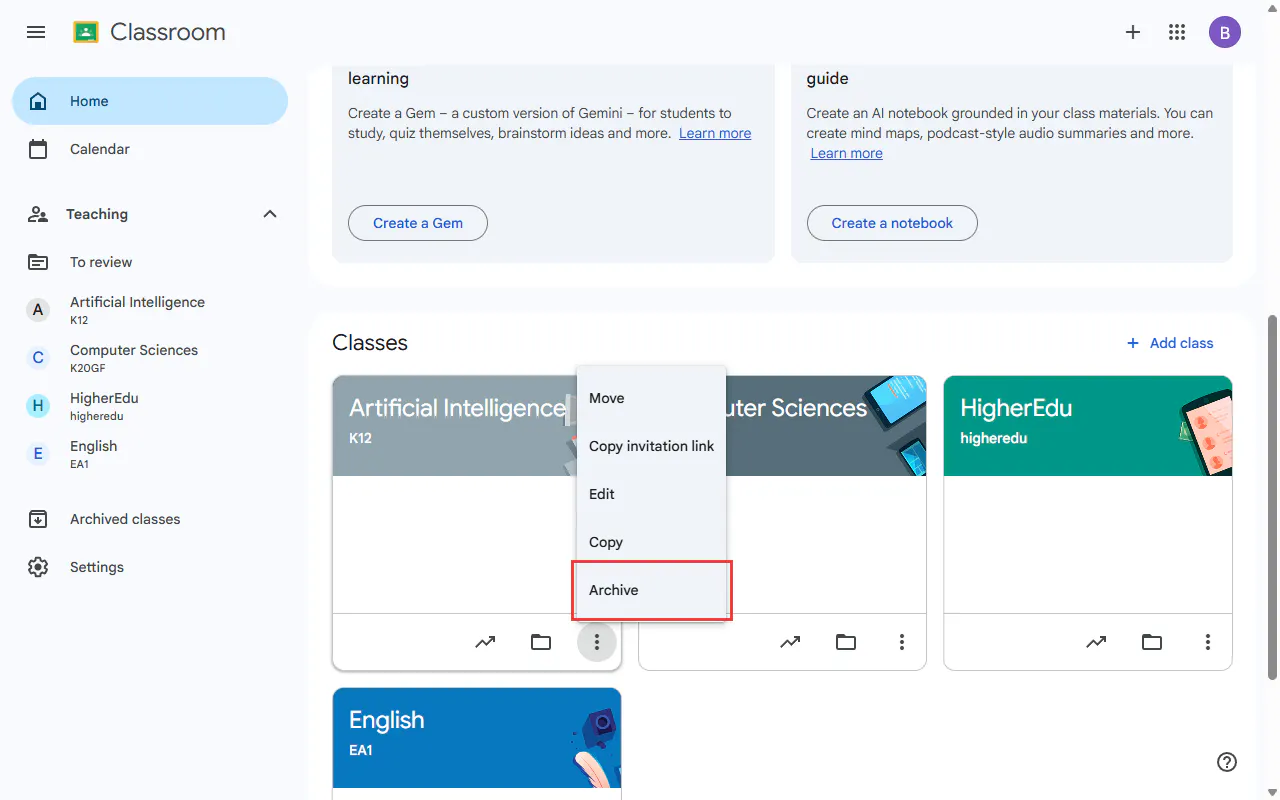
Step 2: On the respective class card, click on the three dotted lines and select "Archive"
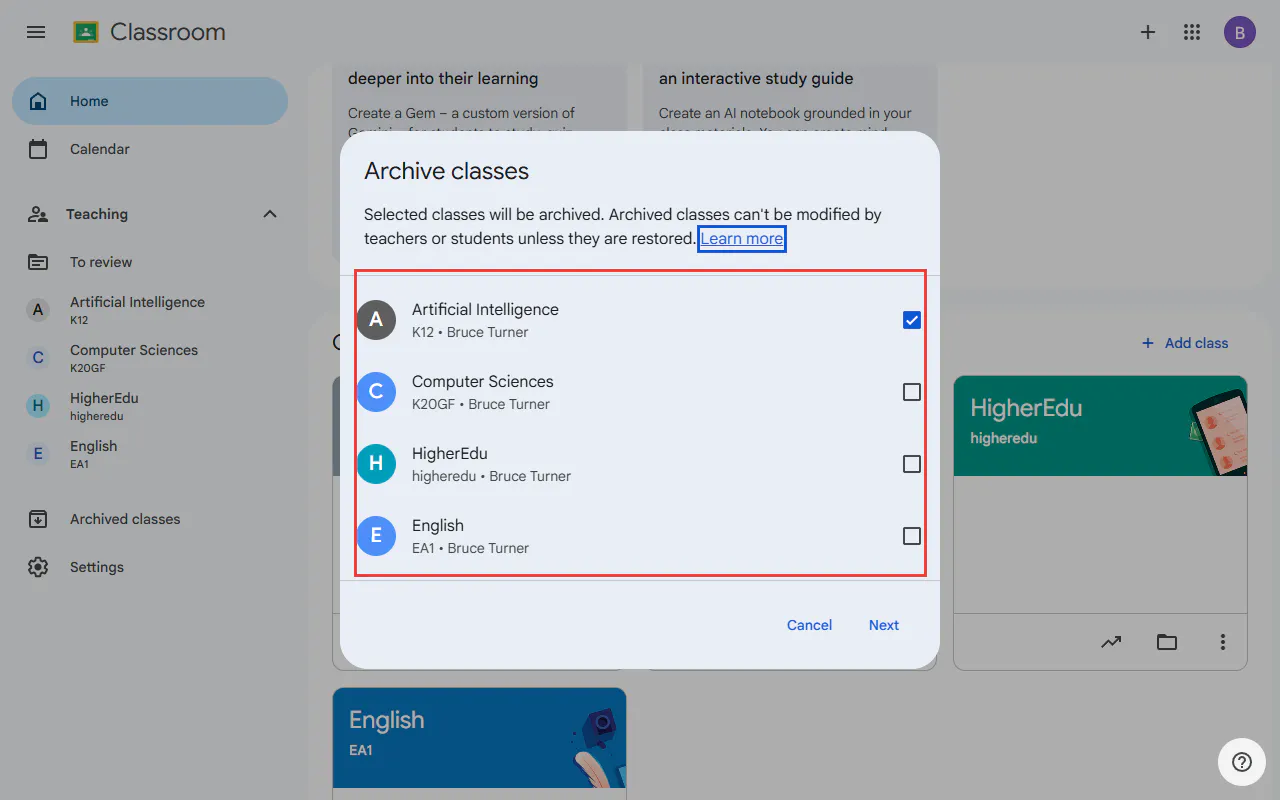
Step 3: Select other classes that have to be archived, if any, and click "Next".
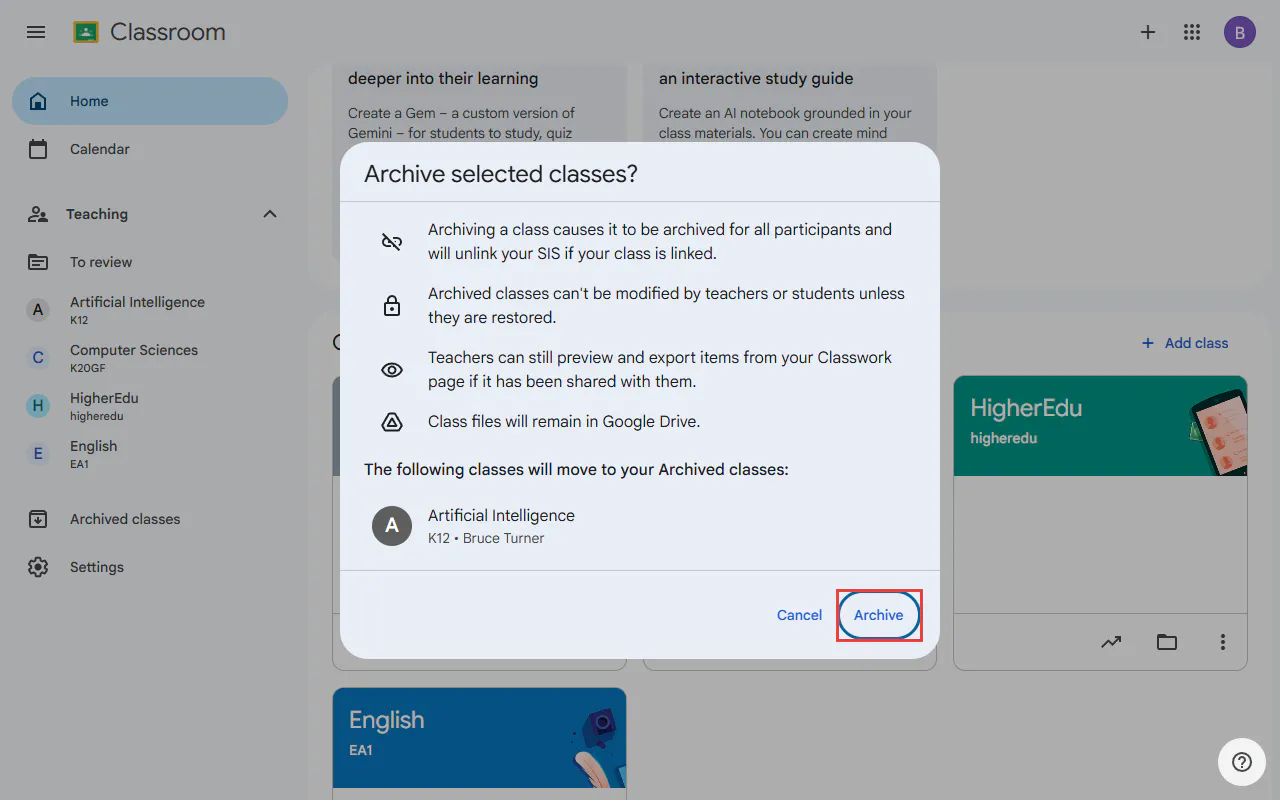
Step 4: Click "Archive".
3.1.3 How can you view an archived Classroom?
Step 1: Go to classroom.google.com.
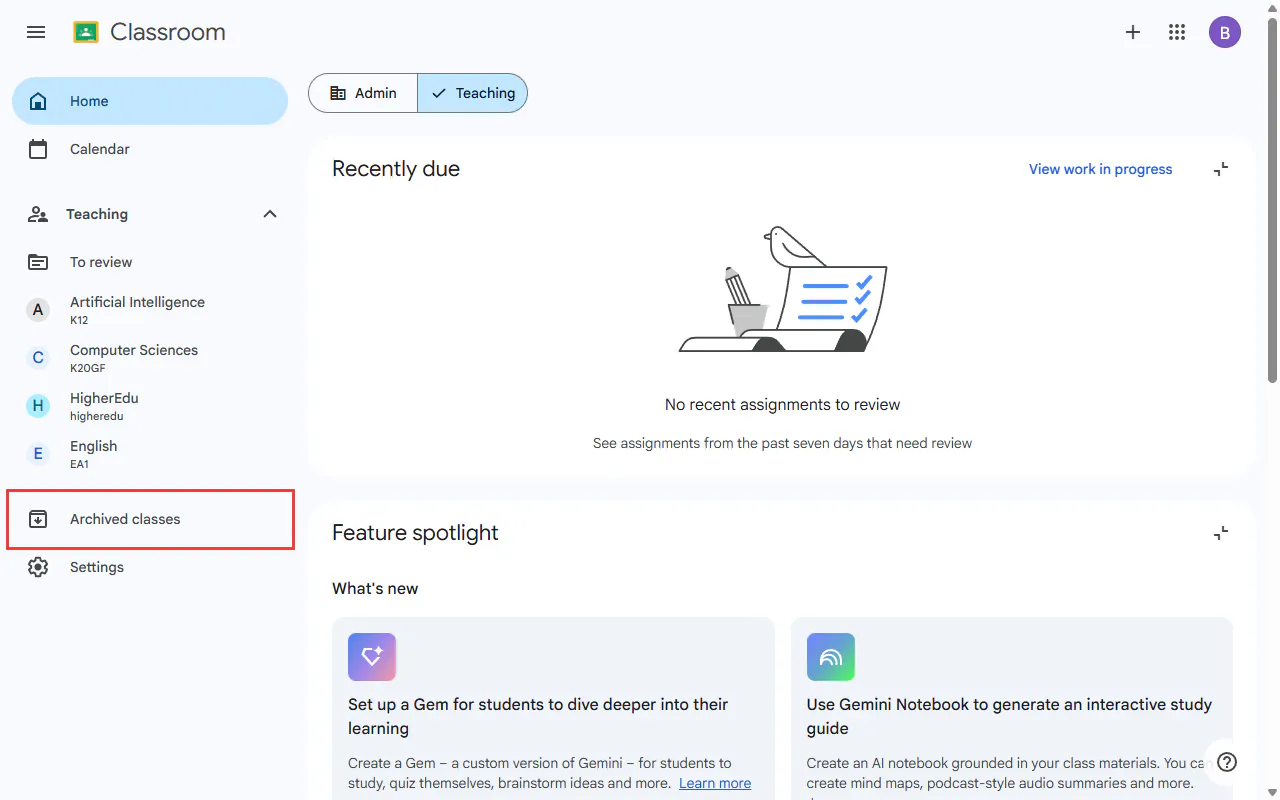
Step 2: Click on the menu at the top left corner.
Step 3: Click on "Archived Classes".
Step 4: Select the class you want to view.
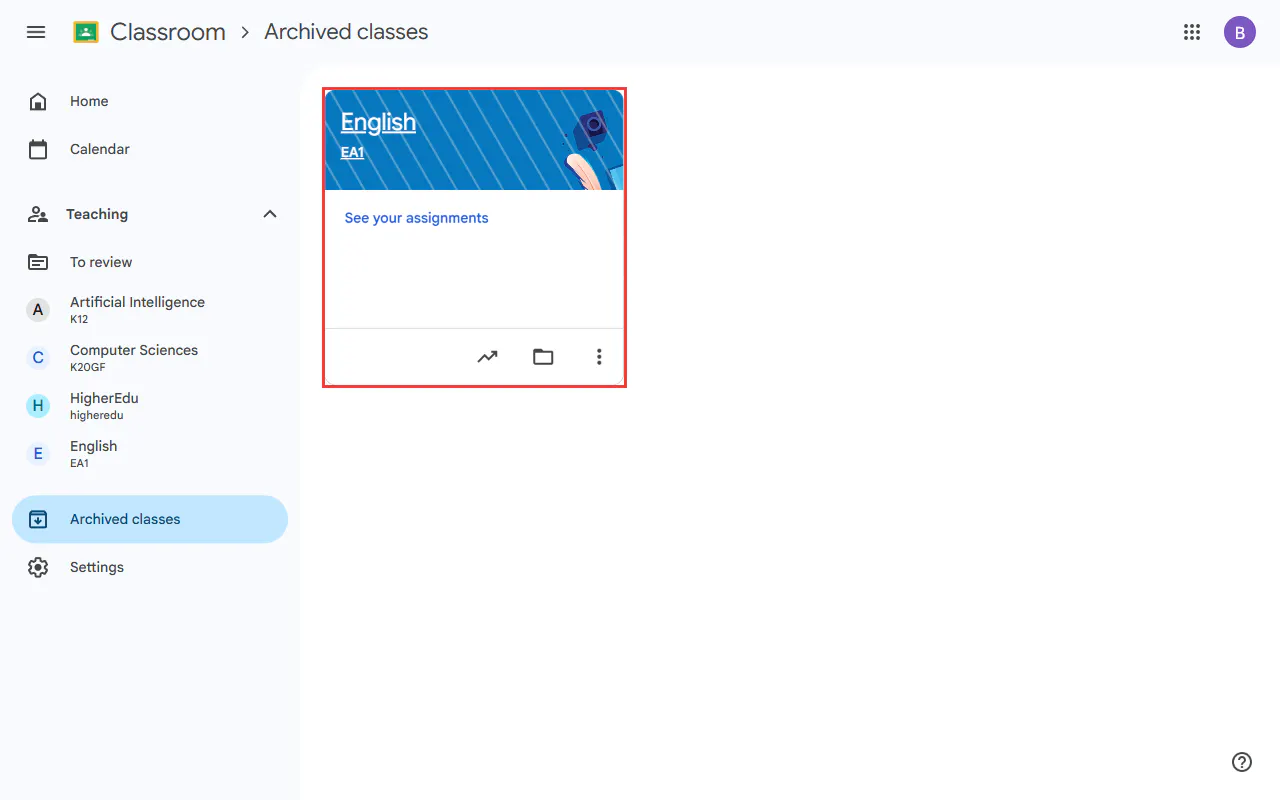
3.1.4 How can you restore an archived Classroom?
Step 1: Go to classroom.google.com.
Step 2: Click on Menu at the top left corner.
Step 3: Click on "Archived Classes".
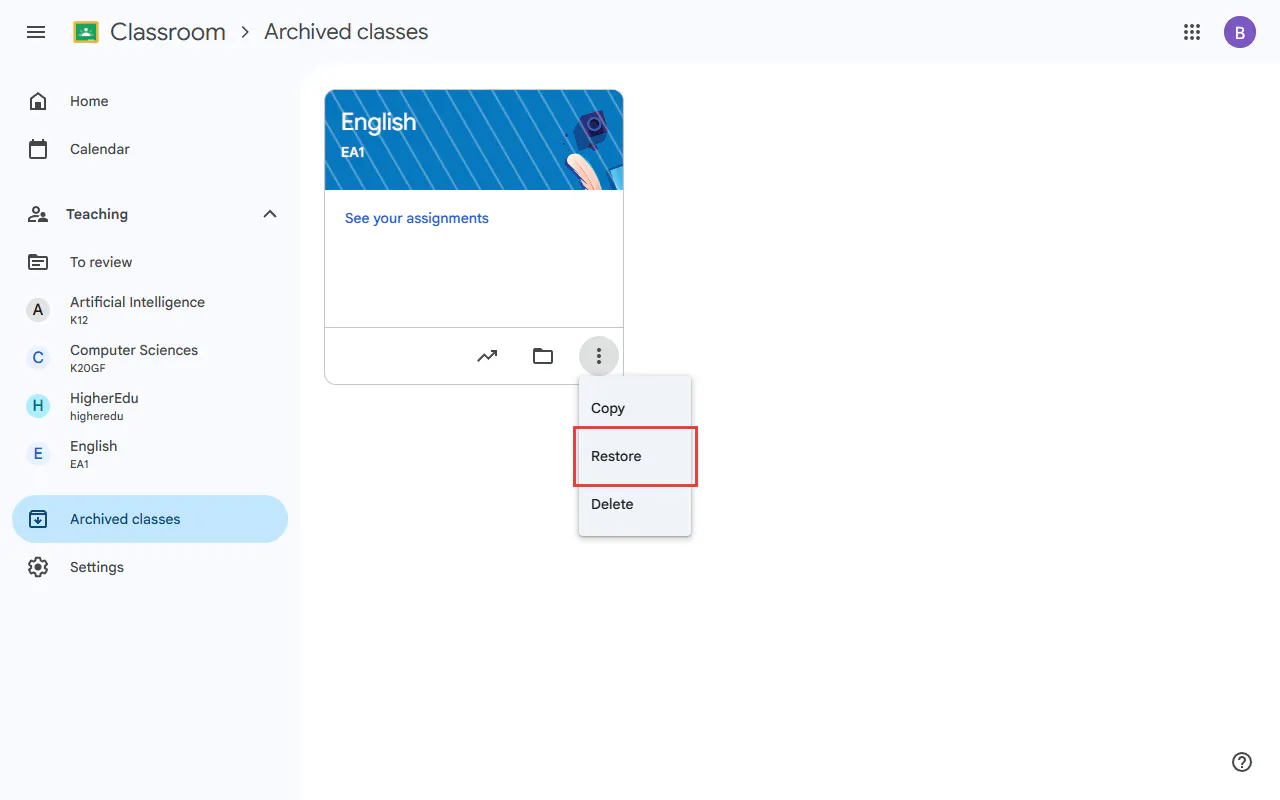
Step 4: Click the three dots on the class card that you want to restore.
Step 5: Click "Restore".
3.2 Transfer ownership
3.2.1 For teachers
Step 1: Go to classroom.google.com.
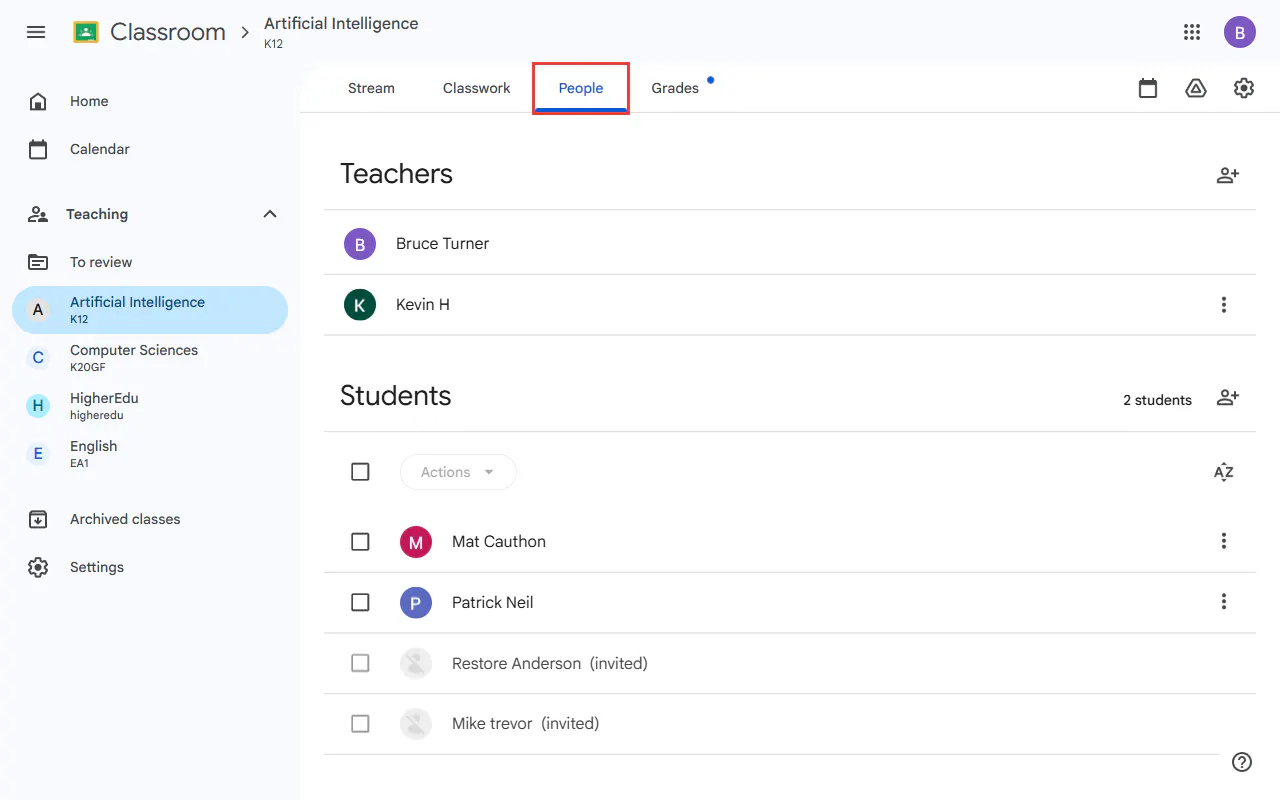
Step 2: Click the respective class and click on “People”.
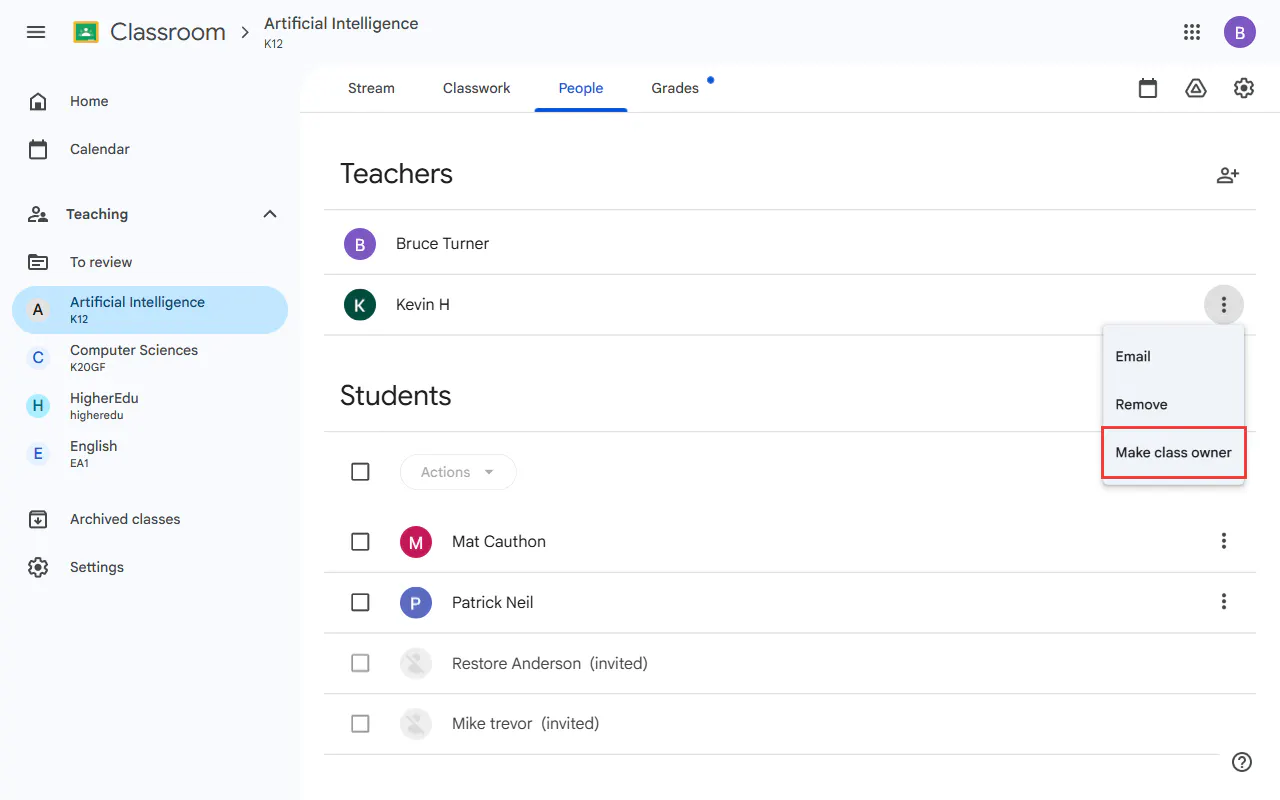
Step 3: Next to the teacher’s name, click “More” and click on “Make class owner”.
Step 4: Click "Invite".
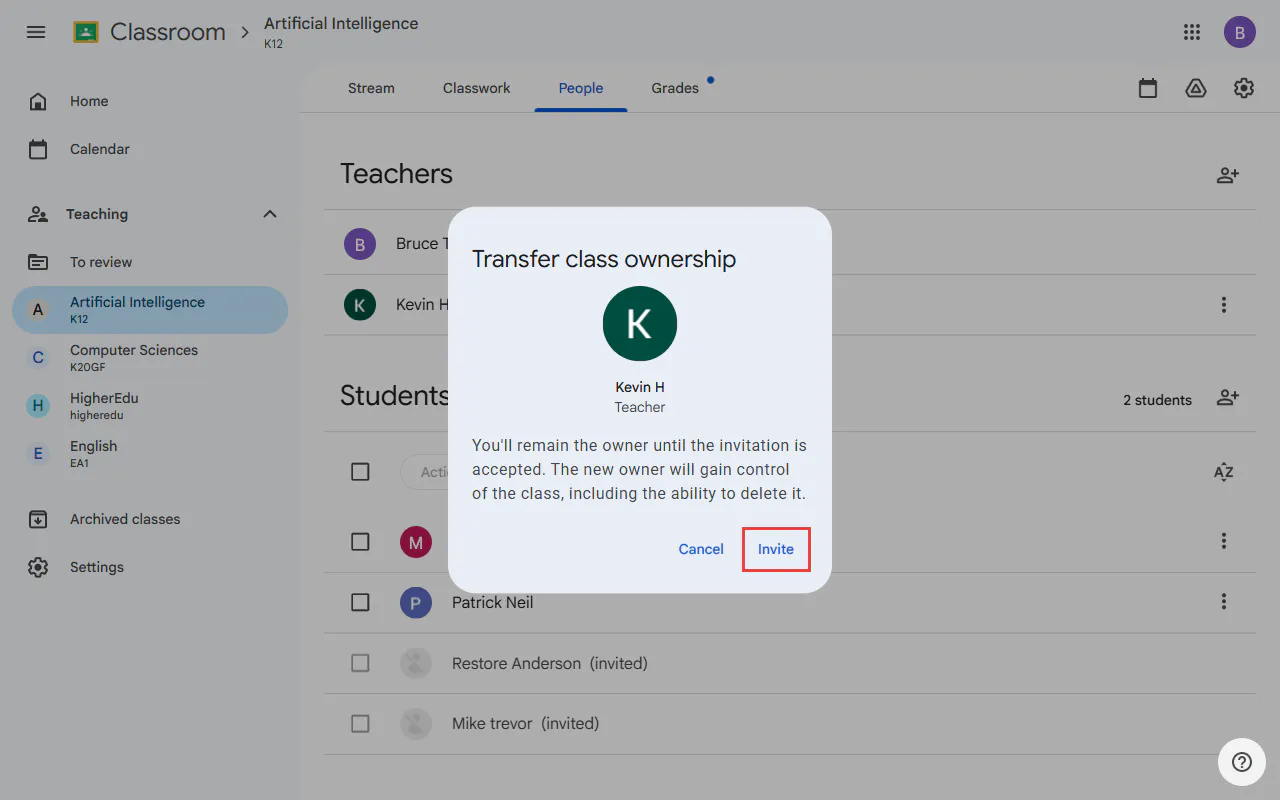
3.2.2 For Google Workspace administrators
As an administrator, you can transfer the ownership of a class to any teacher in your domain using the Classroom API.
Because of the absence of a recycle bin, Google Classroom data gets deleted permanently. Google Classroom does not provide any native features to recover Google Classroom data and hence, recovering deleted Google Classroom data can get tricky. Read our guide to recovering permanently deleted Google Classroom data using Google Workspace native features and third-party tools.
3.3 Third-party Google Classroom backup tools
The native features offered by Google help retain your Google data to a large extent. They do not serve as a backup solution. Google is not responsible for backing up your data. Here is what Google says in their Terms of Service:
3.3.1 Why should you have a third-party backup solution?
- Limitations of native retention settings: The limited native retention capability offered by Google Classroom is a serious risk for educators and schools. Having a third-party backup solution for Google Classroom is critical.
- Easy restoration: Third-party tools such as SysCloud can restore Google Classroom data easily so students and teachers can continue without interruption.
- Fast backups: Take faster backups even for large classrooms
- Protection against ransomware and phishing: Third-party applications like SysCloud secure your data during ransomware and phishing attacks. They automatically identify a safe backup snapshot to restore the affected file(s).
- Coverage Vault does not offer: Classroom sits outside Google Vault entirely. A backup product is the only way to preserve assignments, questions, announcements, grades and the class roster.
3.3.2 How SysCloud offers advanced data retention and recovery options for Google Classroom
- Restore assignments, questions, materials, announcements, calendar, and people back to the user account in just a few clicks.
- Directly restore data back to its previous location with all sharing permissions and folder structure still intact.
- Restore data to another user’s account.
- Permit teachers/staff to restore their own files to facilitate faster recovery.
- Receive regular reports on the status of your backup, restore, and usage reports.
- Define retention rules for an unlimited period of time.
- Locate and recover Google Classroom data within the backup archives using advanced search options.
3.3.3 What does SysCloud restore?
| Features | SysCloud | Google Classroom | |||
|---|---|---|---|---|---|
Assignments | Yes | No | |||
Questions | Yes | No | |||
Materials | Yes | No | |||
Show more | |||||
3.3.4 SysCloud vs native Google Classroom retention
| Features | SysCloud | Native features | |||
|---|---|---|---|---|---|
Unlimited data restore | Yes | No | |||
Restore any file with folder structure | Yes | No | |||
Restore past version automatically | Yes | No | |||
Show more | |||||
Retain Classroom data with SysCloud
SysCloud backs up and restores Google Classroom data, keeping your educational content protected and recoverable. Explore Now
4. Archiving, deleting and unenrolling: what is the difference?
Recommended content
10 Apr 2025
8 min read
10 Apr 2025
15 min read
Get actionable SaaS administration insights
We don’t spam. Unsubscribe anytime.
In this article
- What happens when a Google Classroom is deleted?
- What happens when a student is deleted from the Classroom?
- Google Classroom data retention management
- Archiving
- Transfer ownership
- Third-party Google Classroom backup tools
- Archiving, deleting and unenrolling: what is the difference?

